BackUniswapX

UniswapX

Robinhood Cha
2026-09-11 09:04:29

Robinhood Chain’s revenue surge points to a different playbook: stock tokens first, meme coins later

Robinhood Chain has been live for only about two months, yet on-chain activity has accelerated quickly. Four Pillars research lead 100y said the network’s daily revenue recently topped $4 million at one point, roughly double Hyperliquid’s level, 5 to 6 times that of Tron and Solana, and at one stage accounted for about two-thirds of all Ethereum Layer 2 revenue. The bigger story, however, is not just the fee spike. Robinhood Chain appears to be growing in reverse order compared with most public blockchains. Instead of starting with native crypto infrastructure, then NFTs, games and speculative tokens before moving into real-world assets, Robinhood launched its mainnet in July 2026 with tokenized real-world assets at the center. Its stock token lineup now includes more than 190 products tied to U.S. equities and ETFs, including NVIDIA, Google, Apple and QQQ. Those ERC-20 tokens can move on-chain and plug into trading, lending and collateral use cases. Later, meme coin activity arrived and helped ignite usage, especially through pairings between meme tokens and stock tokens. That combination, along with ready-made infrastructure from Uniswap, Morpho, Chainlink and Alchemy, is what Four Pillars argues has made Robinhood Chain stand out.

330
Robinhood Chain’s revenue surge points to a different playbook: stock tokens first, meme coins later
Robinhood Cha
2026-09-01 02:03:54

Robinhood Chain value map: HOOD, PONS, UNI and tokenized stocks split the upside

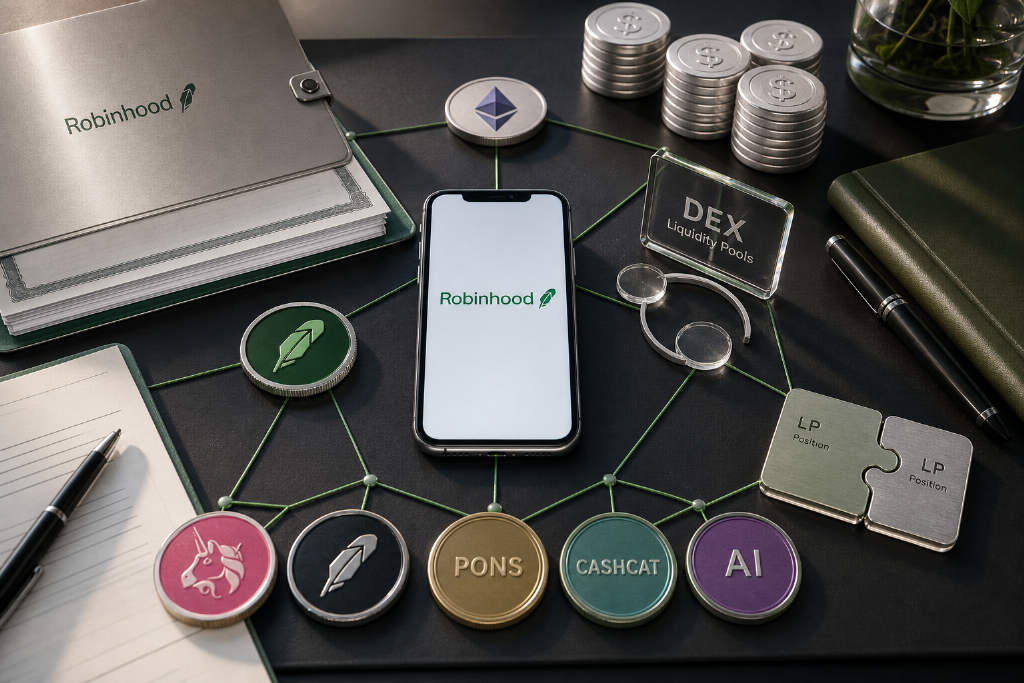
Robinhood Chain has put up numbers that most standalone chains would struggle to reach in a year: more than $1 billion in TVL within two months, daily DEX volume nearing $1 billion, and stablecoin supply close to $770 million. Yet investors looking to buy direct exposure to the network run into a structural twist: there is no native Robinhood Chain token. Gas is paid in ETH, which means value does not automatically concentrate in one asset. TechFlowPost breaks that exposure into eight layers, from Robinhood’s listed equity and Ethereum’s settlement role to launchpads, meme tokens, Uniswap governance, DeFi infrastructure, tokenized stocks and LP positions. The piece argues that some of the most explosive names in the ecosystem, including PONS, CASHCAT and AI, are better viewed as wealth-effect trades driven by attention and liquidity. By contrast, HOOD, UNI and liquidity positions sit closer to actual fee capture, even if each comes with a different transmission path and different limits. The report’s broader point is that Robinhood Chain is producing two markets at once: speculative assets with sharp upside and infrastructure assets tied to trading activity. Which side matters more will depend on whether activity moves beyond meme trading and whether protocol fees keep compounding after the first speculative wave fades.

260
Robinhood Chain value map: HOOD, PONS, UNI and tokenized stocks split the upside
ChainFeeds
2026-09-01 01:58:12

ChainFeeds research roundup tracks Bitcoin’s 50-week test, Robinhood Chain meme activity, and Uniswap’s UNI burn tailwind

ChainFeeds’ Sept. 1 research roundup pulled together five separate themes shaping the crypto market: a historical Bitcoin signal tied to the 50-week moving average, the rise of social trading as an onchain product category, Uniswap’s growing role on Robinhood Chain, IOSG’s view of Reg CA as a compliance filter rather than a fresh token boom trigger, and the feedback loop powering Robinhood Chain’s meme economy. The report argues that Bitcoin is approaching a level that ended three prior bear markets, though confirmation still depends on a weekly close above and sustained support at the 50-week average. It also highlights how social trading apps are turning transparent portfolios and copy-trading behavior into products that look more like financial social networks. On Robinhood Chain, tokenized stock activity has lifted Uniswap volumes and protocol revenue, while UNI’s Firepit and TokenJar design has translated trading into token burn. A separate section says Pons has tied meme issuance directly to buybacks and burns of its platform token, creating a structure the report contrasts with earlier meme cycles. IOSG, meanwhile, says Reg CA is better read as an administrative path for existing tokens to clear securities status than as a broad green light for issuance.

320
ChainFeeds research roundup tracks Bitcoin’s 50-week test, Robinhood Chain meme activity, and Uniswap’s UNI burn tailwind
Robinhood Cha
2026-08-31 17:34:35

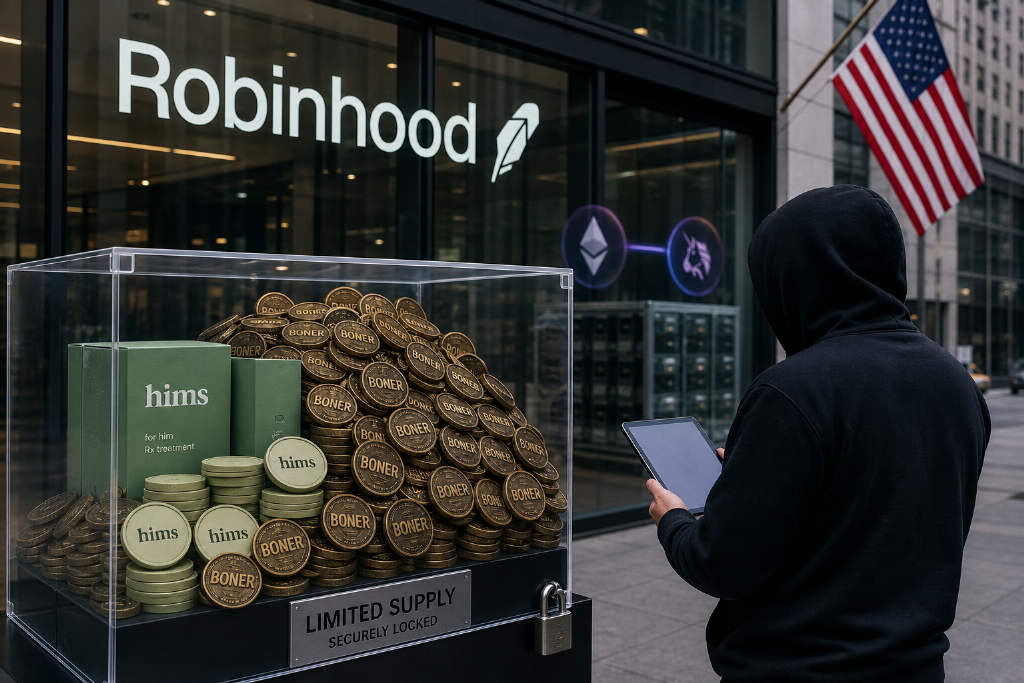
BONER Locks Up More Than Half of Robinhood Chain’s Tokenized HIMS Float

A memecoin tied to the short-interest narrative around Hims & Hers Health has pulled more than half of Robinhood Chain’s tokenized HIMS supply into its own liquidity pool, creating a weekend price dislocation that briefly sent the wrapper to $132.64 while the underlying stock was far lower. Data cited by The Defiant shows BONER’s main BONER/HIMS pool alone held 31,198 HIMS tokens as of Monday, equal to 53% of all issued tokenized shares on the chain, while 83% of total supply sat inside Uniswap v4’s pool manager contract. Because only BBVI, the sole authorized participant named in Robinhood’s documentation, can mint or burn these stock tokens, ordinary traders had no way to expand supply during the squeeze in onchain liquidity. The article argues that a thin float, memecoin launchpads that use stock tokens as quote assets, and weekend market closure combined to let relatively small orders move the wrapper far away from the real equity. Once the NYSE reopened and new HIMS tokens were minted into the premium on Monday, the gap narrowed back toward spot equity pricing. The episode also highlights how Robinhood Chain’s real-world asset pitch is colliding with memecoin speculation, with stock-linked meme pairs now accounting for some of the chain’s most active pools.

1380
BONER Locks Up More Than Half of Robinhood Chain’s Tokenized HIMS Float
Uniswap
2026-08-31 02:02:18

UNI climbs as Uniswap’s stock-token volume on Robinhood Chain jumps 10x in a month

Uniswap’s stock-token trading volume on Robinhood Chain reached a record daily high of about $130 million, roughly 10 times the level seen a month earlier, according to data cited by Foresight News. The move has coincided with a sharp rebound in UNI, which briefly rose above $5.4 on Aug. 31, its highest price since January 2026. From a June low of $2.31, the token has gained more than 100% over the past three months. The report links the rally to two forces. First, Uniswap has become a major venue on Robinhood Chain, where v2, v3, v4 and UniswapX were available from day one. DefiLlama data shows Robinhood Chain’s TVL has passed $700 million, while Uniswap generated $4.29 million in revenue over the past 24 hours, close to half of the chain’s fee income and second only to token launch platform Pons. Second, UNI burns have accelerated. Dune data shows cumulative burns reached about 110 million UNI worth $630 million as of Aug. 31. Since the start of August, daily burn value has averaged more than $400,000, with Robinhood Chain contributing nearly half. The report says the Firepit mechanism allows users to burn UNI to redeem assets accumulated in the TokenJar contract, turning protocol fee capture into a market-based on-chain process rather than a direct buyback.

180
UNI climbs as Uniswap’s stock-token volume on Robinhood Chain jumps 10x in a month
Robinhood Cha
2026-08-13 16:40:55

Gate Research: Robinhood Chain’s Meme Surge Is Driving Early Activity While Its RWA Network Is Still Taking Shape

Gate Research says Robinhood Chain is emerging as one of the most closely watched examples of a traditional finance firm building its own public blockchain, but the network’s early traction has come from Meme tokens rather than tokenized securities. In the report, Robinhood Chain is described as an Arbitrum-based, EVM-compatible Layer 2 built for tokenized stocks, ETFs, private assets, stablecoins and other real-world assets, with a long-term goal of linking issuance, wallets, trading, liquidity and applications in one system. The study argues that the chain’s first wave of growth has instead been led by Meme tokens, Launchpads and active DEX trading. As of July 23, the report says Robinhood Chain had 101 RWA assets on-chain with a combined value of about $21.84 million, while more than 40,000 new tokens were being created in a single day during the same period. That gap, according to Gate Research, reflects the much lower supply threshold for Meme assets compared with regulated financial products. The report also highlights Gate DEX’s full integration with Robinhood Chain. Gate Alpha, Gate Wallet and Gate DEX Swap now support ecosystem asset discovery, wallet interaction, on-chain trading and cross-chain swaps, expanding the network’s distribution channels and external capital access. Gate Research’s core view is that Robinhood Chain currently operates in a two-layer structure: RWA as the long-term asset destination, and Meme as the short-term liquidity engine.

930
Gate Research: Robinhood Chain’s Meme Surge Is Driving Early Activity While Its RWA Network Is Still Taking Shape
Standard Char
2026-08-13 15:14:41

Standard Chartered says its $100 UNI target may be too low as Robinhood Chain drives faster token burns

Standard Chartered now thinks its own long-term price target for UNI may be conservative. Geoff Kendrick, the bank’s global head of digital assets research, said Thursday that the $100 target he set in June for the end of 2030 could be too low after Uniswap began burning UNI at a much faster pace using protocol fees earned on Robinhood Chain. The new burn rate is based on a short sample. Kendrick’s extrapolation uses 17 days of data, much of it tied to a chain that launched on July 1. Even so, the numbers have changed quickly. DefiLlama data cited in the report shows Uniswap protocol revenue averaged $244,222 a day between July 27 and Aug. 12, up from $99,770 a day in the prior 17-day period. Under UNIfication, the December 2025 upgrade that routes protocol fees into buybacks and burns, that revenue is used to buy and burn UNI. At UNI’s current price of $3.53, the recent run rate would fund the purchase and burn of about 25 million tokens a year, or roughly 4% of the 624.2 million circulating supply. Kendrick said that level is clearly unsustainable over time, but added that more partnerships like Robinhood could keep the economics stronger than he had previously modeled. Data from the past seven days also shows Robinhood Chain accounting for 60% of Uniswap’s protocol revenue, though the article notes that governance changes taking effect on July 17 also coincided with the jump.

800
Standard Chartered says its $100 UNI target may be too low as Robinhood Chain drives faster token burns
RWA
2026-08-12 10:00:00

RWA nears $40 billion as holder count jumps to 1.7 million even as DeFi cools

Real-world assets remain one of the few crypto segments still expanding while native DeFi activity softens. Data cited by Foresight shows the publicly distributed RWA market, excluding stablecoins, reached $38.17 billion as of Aug. 10, 2026, leaving it $1.83 billion short of the $40 billion mark. The number of holders climbed to 1.7 million, with article figures showing sharp growth from June 30. That expansion is concentrated rather than broad. Tokenized U.S. Treasurys, tokenized equities and tokenized commodities account for the clearest gains, while a small set of products controls most of the market’s value. The report cited in the article tracked more than 7,000 tokenized products, yet only 62 assets represented 88% of market value. The piece argues that traditional financial firms, not crypto-native experimentation alone, are driving this phase. BlackRock’s BUIDL, Franklin Templeton’s tokenized funds and Ondo Finance are all highlighted, alongside rising RWA deposits and trading activity inside DeFi. At the same time, the article says unresolved issues around custody, legal ownership, redemption paths and regulation still stand between current growth and durable scale.

1070
RWA nears $40 billion as holder count jumps to 1.7 million even as DeFi cools